
Easy Salmon Tray Bake with Asparagus (Ready in 30 Minutes)
Jump to Recipe
If you’re in the mood for a healthy dinner that’s ready in 30 minutes, this salmon tray bake is packed with yummy veg like asparagus and broccoli. It also has a sweet, savoury honey soy sauce topping that adds a spicy, flavourful taste to each bite. After you make the salmon tray bake, try my Creamy Salmon Pasta for something more indulgent!

Why you’ll love this recipe
- Easy cleanup: There’s nothing easier than a one-pan recipe, which is what makes this great for busy weeknights! For another one-pan option, this Marry Me Chicken Tortellini is just as quick and easy as my salmon traybake recipe.
- Big flavor: Combining ingredients like honey, soy sauce, and red pepper flakes makes each bite super flavourful, similar to other salmon traybake recipes you might love, like my Crispy Pan-Fried Salmon Bites.
- Healthy: I use a rainbow of veg and a light sauce in my salmon tray bake recipe, making it an excellent option for a healthy dinner.
Love fish? You’ll love The Best Garlic Prawns, Perfect Pan Fried Cod Recipe and Prawn and Chorizo Pasta
Table of Contents
Ingredients
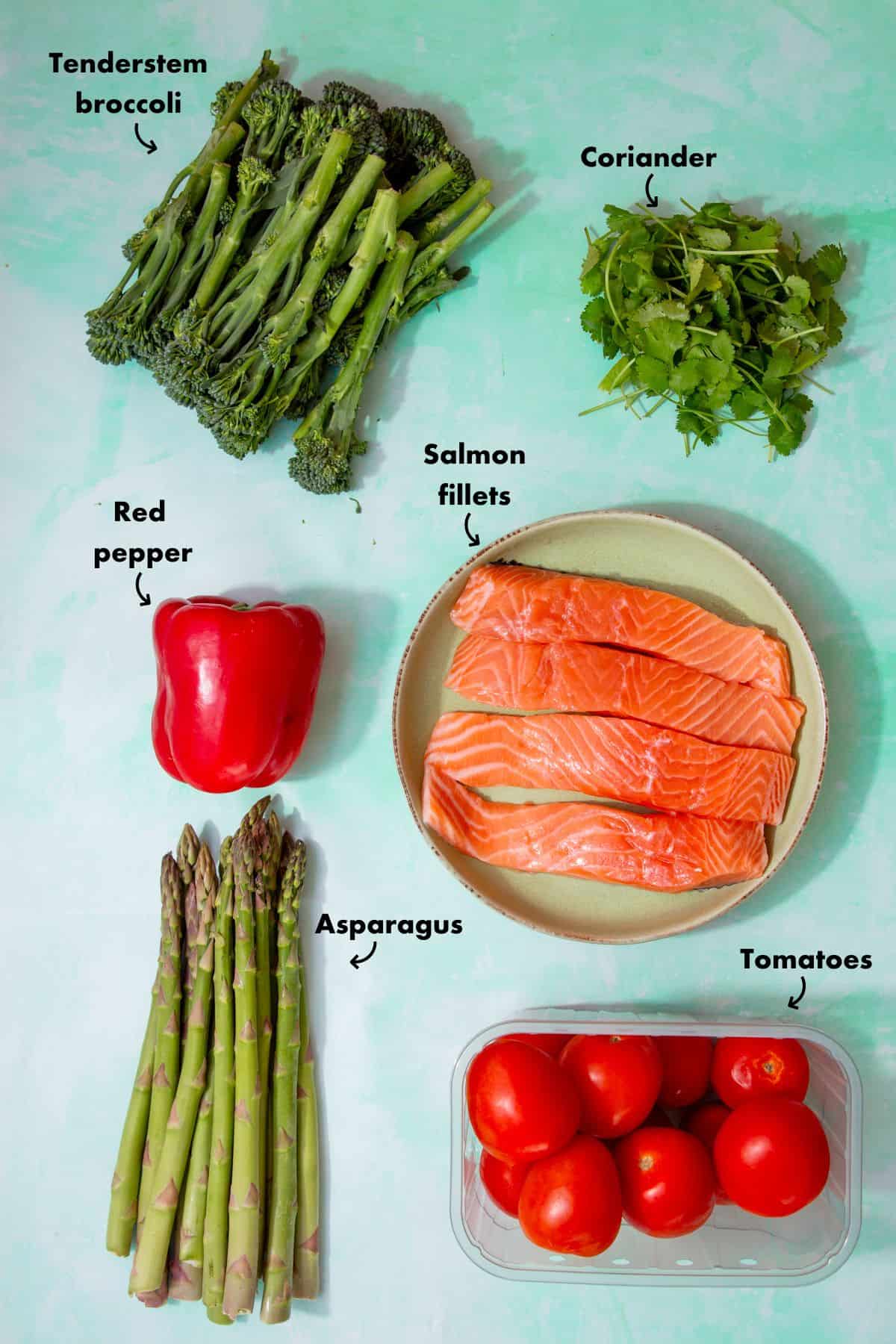
Here’s everything you need to make this yummy salmon tray bake for an easy weeknight dinner.
- Salmon Filets: Frozen or fresh filets will work well in this salmon traybake, and frozen filets don’t even need to be defrosted (just add a few minutes to the bake time). The salmon potato tray bake would be perfect served with my Easy Diced Air Fryer Potatoes.
- Asparagus: I love adding asparagus to a traybake for extra nutrients, but you can swap it with whatever veg you prefer depending on what’s cheapest and in season. Sweet potatoes or these Roasted Mediterranean Vegetables would be great as well.
- Honey: The sweetness from honey helps balance the savoury, umami taste of soy sauce to take this tray bake salmon from good to great. If you don’t have honey, maple syrup or agave will also work.
See the recipe card for full information on ingredients and quantities.
Variations/ Adaptations
Here are a few ways to adapt this salmon tray bake to match your taste and what you have at home!
- Green Bean Swap: If you prefer green beans, include those instead of asparagus. They roast quickly and give a crisp texture similar to The Best Roasted Parsnips. A salmon tray bake with new potatoes is great, too.
- Twist: For a Mediterranean twist, add cherry tomatoes, capers, and olives. Alternatively, you can squeeze lemon onto salmon tray bake recipes after cooking, or serve them with lemon slices. For a more elevated finish, drizzle a tiny bit of honey-garlic glaze over the top right before serving.
- Salmon Alternatives: You can swap the salmon for tofu or prawns instead, if you’re making this for someone who prefers seafood alternatives or a meat-free option. This Crispy Soy Tofu, Aubergine & Rice recipe is one of my favorite ways to cook tofu.
How to make Salmon Tray Bake
Preheat oven to 190°C FAN/ 210°C Conventional
- Start by slicing the tomatoes in thick wedges, slicing the tenderstem broccoli, asparagus and red pepper into smaller pieces (Image 1).
- Then place into the baking tray. Coat with 1 tbsp of extra virgin olive oil and season with salt and pepper. Pop in the oven for 20 minutes (Image 2).

3. Meanwhile, add your salmon fillets to a bowl and coat with 1 tbsp of soy sauce, 1 tbsp of honey and the remaining olive oil. Stir to get everything incorporated, and set aside in the fridge (Image 3).
4. When your timer has gone off, remove the tray from the oven (Image 4).

5. Coat the vegetables in 2 tbsp of soy sauce and 1 tbsp of honey. Add the marinated salmon and asparagus into the tray, skin facing down. Pop the tray back in the oven and cook for a further 10 minutes (Image 5).
6. Remove from oven and top with coriander and chilli flakes, then dive in! (Image 6).

Need inspiration for some main dish recipes? Try my Sausage and Fennel Pasta, Vegetarian Burrito Bowl and Grinder Salad (Italian Sub Salad).
Tips for the best result
- Don’t overcook salmon. For this salmon tray bake, use a meat thermometer to hit your preferred cook (medium rare, medium, etc) so the fish stays tender.
- Try to remove the baking tray from the oven just before it looks fully cooked, as residual heat will finish the job.
- Let your salmon rest before serving for about 10 minutes, as that helps the juices redistribute for flakier, juicier bites.
- I don’t recommend eating the skin for this recipe. The homemade sauce keeps the skin soft, so you can toss it once cooked. Serve with crispy potatoes like my Crispy Air Fryer Baby Potatoes or greens for contrast.
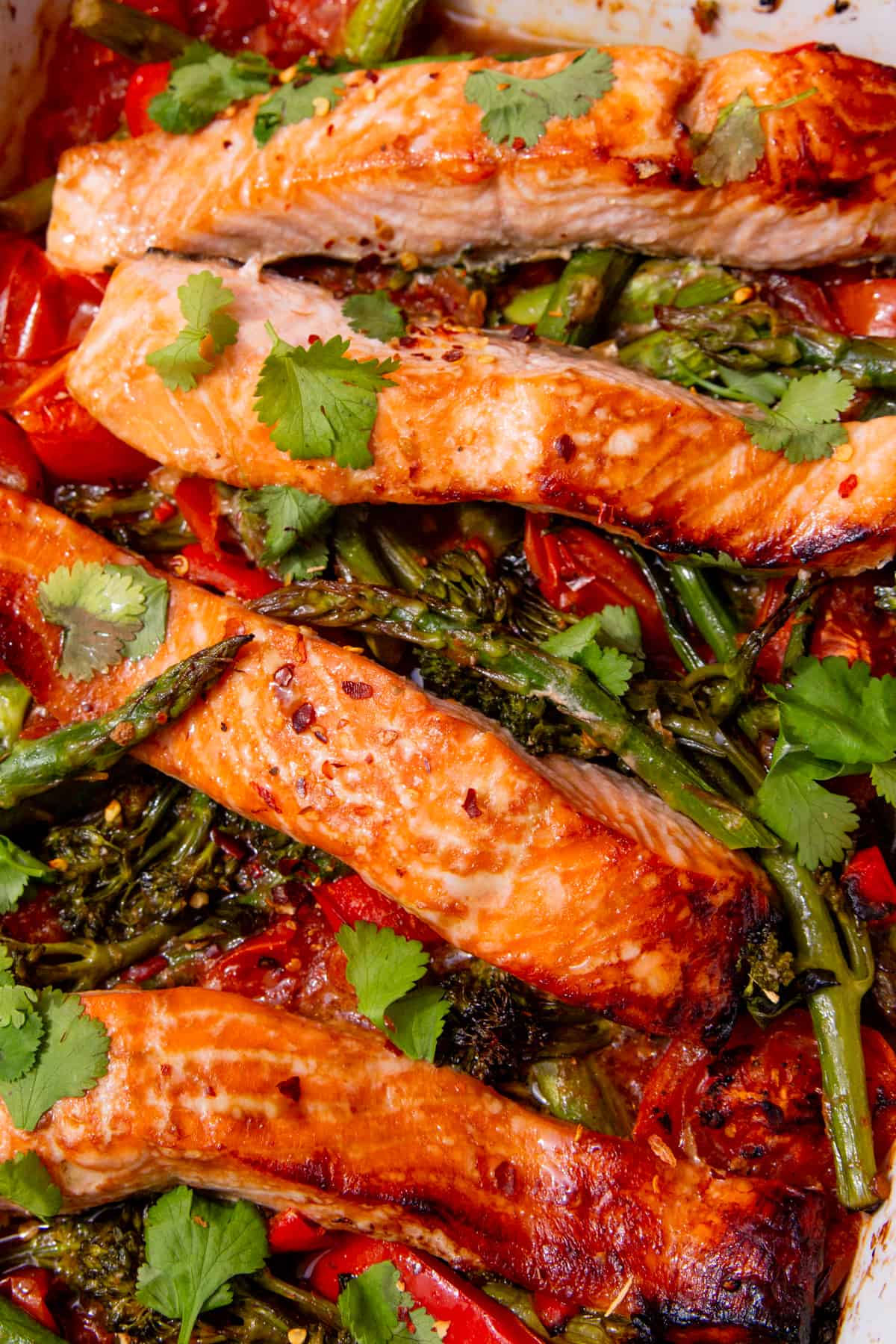
Serving Suggestions
For a lighter dish, consider serving this salmon tray bake as-is. On the other hand, if you want a more filling meal, you can add rice, couscous, or noodles to the side of the salmon and veggies, and it’s also a great recipe to serve with crusty bread.
Serve it with:
Leftover Storage and Reheat Instructions
I recommend enjoying this salmon tray bake fresh, as it will have the best flavour at that time. However, if you have leftovers, they will stay good in the fridge for up to three days.
Refrigerator: Ensure you allow the recipe to cool before putting the leftovers in an airtight container in the refrigerator, similar to how you’d store my Sweet Chilli Salmon.
Freezer: You can freeze this tray bake. Once the salmon and veggies cool fully, store them in an airtight container and freeze them for up to one month.
Reheat: Warm gently in the oven to preserve texture, and try not to microwave for too long so the salmon doesn’t go rubbery.
How to Choose the Best Salmon for a Tray Bake
When making this salmon tray bake, it’s essential to grab the best salmon filets possible since they’re the star of the show. But either way this recipe is super budget-friendly since the veg are flexible and salmon portions go a long way.
With four quick steps and simple ingredients, the most hands-on part of this salmon bake recipe is chopping the veg and prepping the salmon, then most of the 30 minutes is spent letting everything bake in the oven.
Fresh salmon is great if there are good-quality filets available, however frozen filets can also be excellent and are often prepared in a similar way, like in my Air Fryer Frozen Salmon recipe. As long as the brand is reputable, both options will work well.
Farm-raised vs wild-caught is a controversial topic! Farmed salmon is often larger, while wild-caught is usually leaner and considered healthier, although it can be pricier. Either one works perfectly fine here.
There are also different varieties of salmon to choose from. King salmon is buttery, sockeye has a rich flavour, Atlantic is affordable, and Alaskan is often wild-caught with fewer contaminants.
While salmon steaks and filets may look similar, I always recommend filets because they’re cut parallel to the spine. This means you’ll be left with a flakier end result.
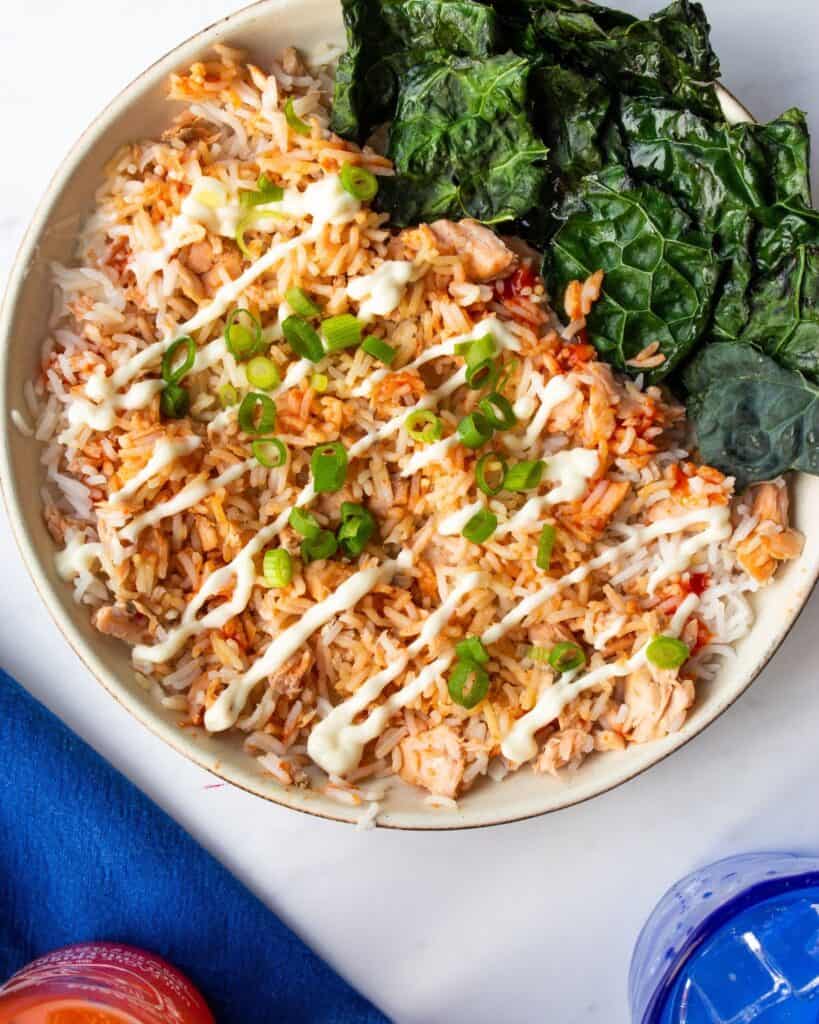
If you don’t want to eat this for multiple days in a row, you can easily turn leftovers into something new. Add pieces on top of a salad for a protein boost, chop them for salmon tacos, or mix into a bowl like my Viral Salmon Rice Bowl and serve with rice, noodles, or bread.

FAQs
When you create recipes where you bake salmon in the oven, it’s best to leave the salmon uncovered. Fish typically cooks quite quickly, so it’s not necessary to cover it with foil.
The best method for preventing overcooked salmon is to use a meat thermometer. This step ensures you can properly monitor the internal temperature of the fish.
If the salmon is already prepared and descaled, you do not need to wash it before cooking. However, if it still has any scales, you can rinse the filets under cool water to help clean the fish, and be sure to pat them dry before seasoning.
For flaky, juicy results, aim for around 130-135°F (54-57°C) in the thickest part of the salmon. Medium rare is 125-130°F (51-54°C), medium-well is 135-140°F (57-60°C), and well-done is 140-145°F (60-63°C), and remember salmon keeps cooking slightly as it rests.
Try some yummy, healthy soup recipes, as a starter: Tomato & Lentil Soup, Courgette Soup and Carrot and Coriander Soup

If you tried this Salmon Tray Bake recipe, it would mean so much to me if you could leave a review & a star rating to let me know how you found it! I love hearing about your experiences – it motivates me to keep creating more and more recipes for you guys 💛 Let’s get cooking! – Mimi x
30-Minute Salmon Tray Bake with Asparagus

Ingredients
- 4 salmon fillets (£4.40)
- 160 g tenderstem broccoli (£1.35)
- 6 tomatoes, sliced into thick wedges (£0.95)
- 260 g asparagus (£0.69x2)=(£1.38)
- 1 red pepper, thinly sliced (£0.59)
- Fresh coriander (£0.52)
Cupboard Essentials
- 2 tbsp extra virgin olive oil
- 3 tbsp soy sauce
- 2 tbsp honey
- Salt & Pepper
Method
Preheat oven to 190°C FAN/ 210°C Conventional
- Start by adding the tomatoes, tenderstem, asparagus and red pepper into the tray. Coat with 1 tbsp of extra virgin olive oil and season with salt and pepper. Pop in the oven for 20 minutes.
- Meanwhile, add your salmon fillets to a bowl and coat with 1 tbsp of soy sauce, 1 tbsp of honey and the remaining olive oil. Stir to get everything incorporated, and set aside in the fridge.
- When your timer has gone off, remove the tray from the oven. Coat the vegetables in 2 tbsp of soy sauce and 1 tbsp of honey. Add the marinated salmon and asparagus into the tray, skin facing down. Pop the tray back in the oven and cook for a further 10 minutes.
- Top with coriander and chilli flakes, then dive in!
Notes
- Avoid overcooking salmon; treat it like cookingsteak with desired doneness (medium rare, medium, etc.).
- Allow salmon to rest for 10 minutes post-cooking for juicier, flakier texture.
- Skip eating the skin in this recipe as it won't crisp up due to the sauce; discard once cooked.
Nutrition

Leave a comment and a rating!

- Weekly meal plans with a £20 budget
- 150+ exclusive recipes
- Personal dashboard
- Exclusive step by step videos
- Shopping list tools
- Advert Free experience
Comments