
Korean Marinated Eggs (Mayak Eggs)
Jump to Recipe
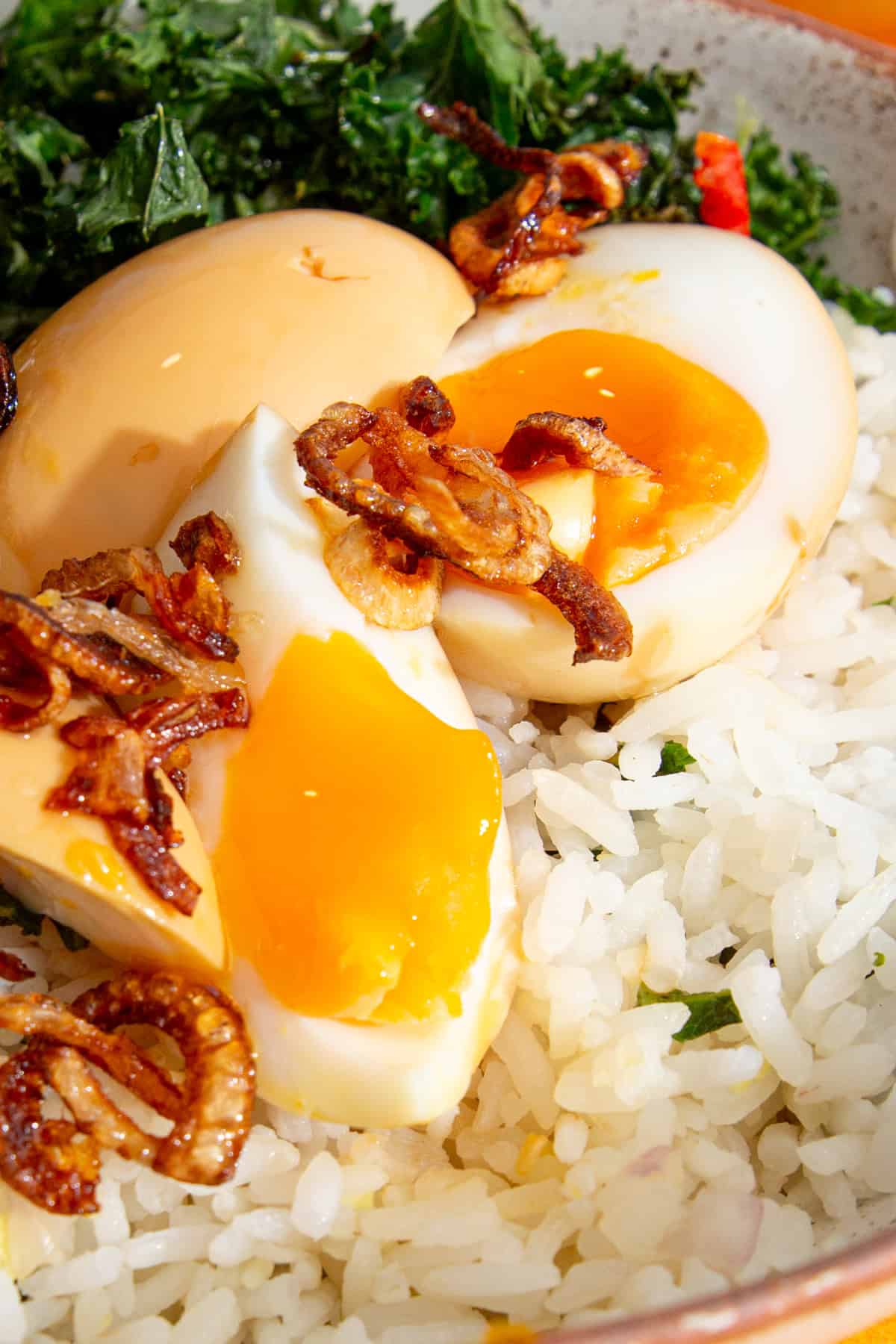
Marinated eggs are a popular Korean side dish known as mayak eggs (mayak gyeran) – they’re often nicknamed Korean “drug eggs” because they’re so addictive you’ll keep going back for another bite. These soft-boiled eggs are soaked in a savoury soy sauce marinade that gives them a nice umami flavour and a perfectly jammy centre. They’re usually served as a simple Korean banchan alongside warm rice or added to noodle dishes like these Spicy Gochujang Noodles, and have recently gone viral thanks to how incredibly easy they are to make & how flavourful they are.
A Quick Look At The Recipe
- ✅ Recipe Name: Korean Marinated Eggs (Mayak Eggs)
- 🕦 Ready in: 5 hours and 10 minutes
- 🤝 Serves: 4
- 🍴 Calories: 567kcal
- 🧑🍳 Main ingredients: eggs, soy sauce, garlic, red chillies
- ✨ Summary: Try these Korean marinated eggs soaked in a soy sauce marinade with a jammy centre. Perfect as a high-protein snack or noodle topping!
Why you’ll love this recipe
- On-the-go snack: Marinated eggs are a delicious protein-rich snack that keeps well in the fridge for several days. Just pack them in an airtight container and enjoy them cold straight from the fridge (just like a hard-boiled egg).
- High in protein: Made mostly from eggs and a light marinade, this mayak eggs recipe is naturally high in protein and so delish. They’re usually served over rice as a quick meal or prepared ahead as part of weekly meal prep. For another high protein snack, give these Easy Cottage Cheese Egg Bites a go.
- Easy to make: This Korean marinated eggs recipe has only three steps, so it’s great for home cooks of all skill levels. And you can easily adjust the flavor by adding more or fewer chillies, and including sesame seeds, green onions, sesame oil, etc.
Need inspiration for some other Korean inspired recipes? Try my Korean Spiced Turkey Mince, Gochujang Noodles and Creamy Gochujang Pasta.
Table of Contents
Ingredients
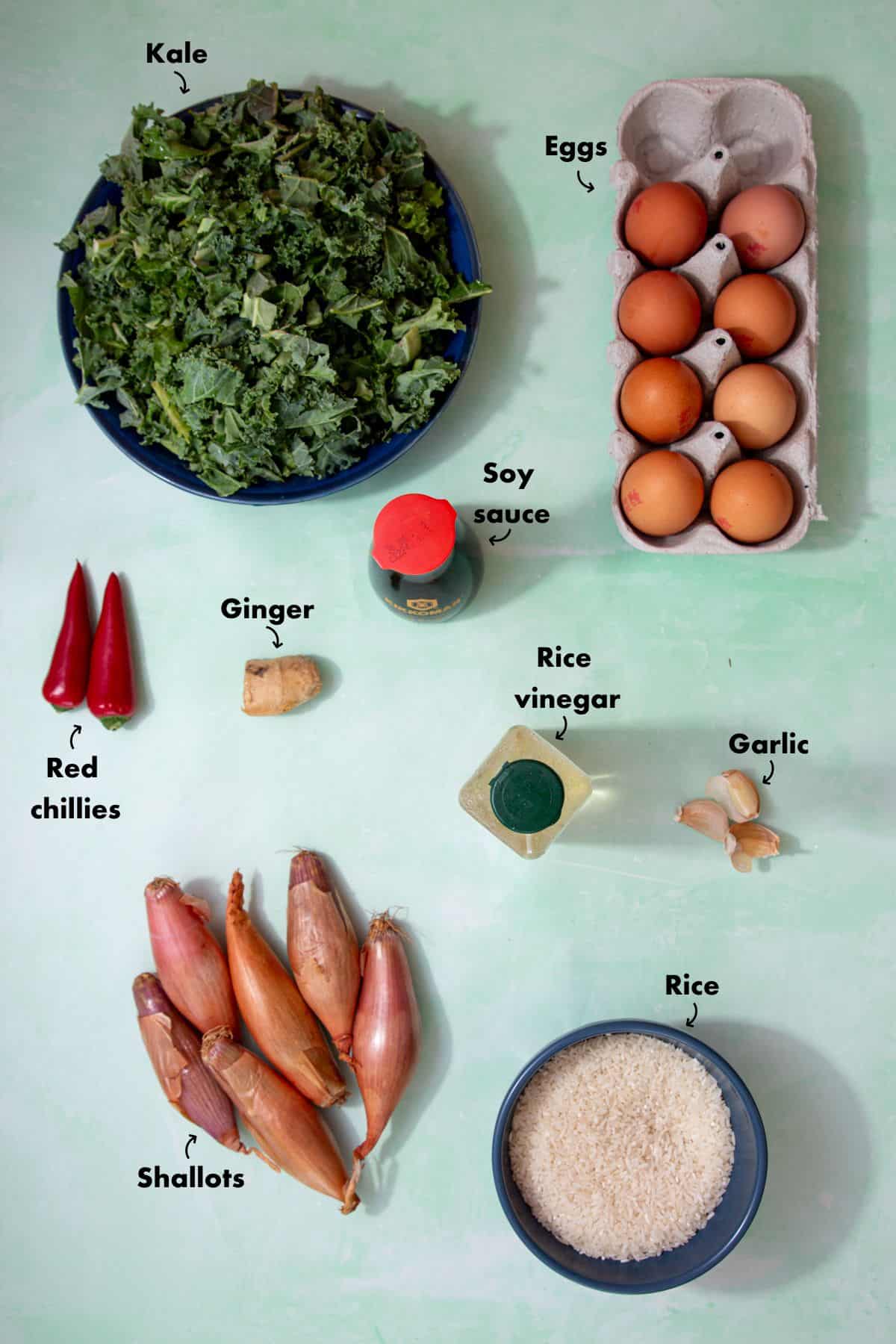
- Eggs: You’ll need eggs for this recipe, of course. Soft-boiling gets you the signature jammy yolk, while the whites absorb the marinade as they sit. Korean drug eggs taste best after about 12-24 hours, when the marinade has fully absorbed into the egg whites.
- Garlic: Fresh garlic adds depth and aroma to the soy marinade, giving the eggs their signature flavour as they soak. As the eggs sit, the garlic infuses the soy sauce mixture and helps create the umami-rich taste marinated eggs are known for.
- Red Chillies: Chillies add a bit of heat that balances the salty-sweet marinade, and you could then use any them in this Crispy Chilli Chicken as well. You can also use jalapeños or chili garlic sauce depending on your spice preference for your drug eggs.
See the recipe card for full information on ingredients and quantities.
Variations/ Adaptations
Try these variations when making marinated eggs for a recipe with your own twist:
- Try other spices: Adjust the flavour of your mayak eggs by adding in other spices or ingredients to the marinade. Star anise is a great addition, and you can also use dashi broth instead of water for more flavourful Korean eggs.
- Hard boiled eggs: If you don’t enjoy soft-boiled eggs, you can use hard boiled eggs instead. As a note, you won’t get the jammy inside like you would with soft boiled eggs.
- Adjust the marinade balance: You can very easily change the flavour profile of this drug eggs recipe depending on your preference. Add a little extra sugar or honey for something sweeter, increase the vinegar for more tang, or add some extra garlic and chillies for a bolder marinade.
How to make Korean Soy Marinated Eggs
- Set a pan of water over a medium heat and bring to a boil. Add the eggs, lower to a simmer and cook for seven minutes (Image 1).
- Transfer the eggs to cold water to stop them cooking further. At the same time that the eggs are cooking, set another pan of water over a medium heat, add the rice and cook for the amount of time given on the packet (Image 2).

3. Meanwhile, add the soy sauce, rice vinegar and water to a large bowl. Remove the shell from the eggs and add them to the soy sauce mix (Image 3).
4. Place a small plate over the top of the eggs to ensure they remain submerged during the marination process and chill in the fridge for a minimum of four hours (or for best results, eight hours) (Image 4).

5. After 8 hours the eggs will be fully marinated (Image 5).
6. Slice in half or quarters and the eggs are ready to serve (Image 6).

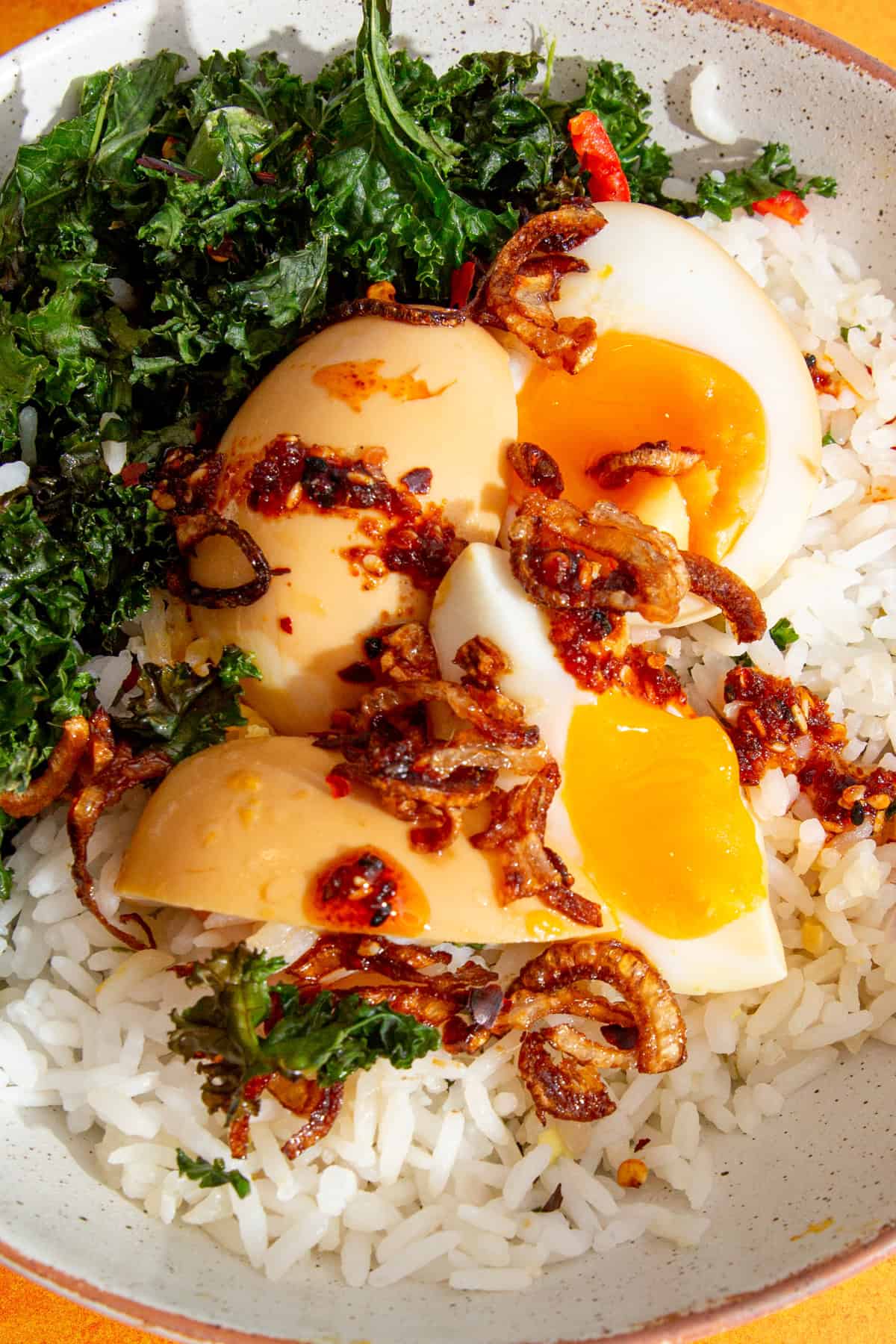
To serve, add a portion of crispy kale and fragrant rice to a bowl. Slice two soy marinated eggs in halves or quarters and add, then drizzle over some of the marinating liquid and some additional soy sauce. Garnish with the crispy shallots and serve with an extra drizzle of chilli oil if you have a bottle in your cupboard.
Need inspiration for some main meal recipes? Try my Aubergine Parmigiana, Cajun Dirty Rice or Quorn Chicken Pieces Recipe.
Tips for the best results
- If you leave the eggs to marinate longer, add some water to help dilute the marinade. I highly recommend this, as it will help prevent your marinated eggs from being overly salty.
- If you go through the batch of eggs quickly, you can toss a few more into the marinade. Be sure to do this only if the marinade is 1-2 days old. If you wait too long, harmful bacteria can grow. You can also use it to create other recipes like stir-fries or as a sauce for fish.
- Letting the eggs sit out for 10-15 minutes before cooking helps prevent cracking when they hit the hot water and encourages more even cooking for a consistent jammy centre.
- Make sure each mayak egg stays completely covered by the marinade so they colour and flavour evenly. If needed, place a small plate or paper towel on top to gently hold them under the liquid.
What Are Korean Soy Marinated Eggs (Mayak Eggs)?
Mayak eggs, or mayak gyeran (마약계란), are Korean soy marinated eggs known for their soft jammy yolk and super savoury flavour. The name translates to “drug eggs” as a playful way to describe just how delicious and addictive they are. In Korea, they’re usually served as a simple homemade banchan (side dish), often eaten over some warm rice or added to noodle bowls like ramen.
The eggs are usually soft-boiled then soaked in a soy sauce marinade made with garlic, chillies, green onions, and sesame. The marinade slowly penetrates the egg whites, creating a balance of salty, sweet, and umami flavours while keeping the centre rich and creamy. The flavour actually improves after several hours, which is why mayak eggs are prepared ahead of time.
Mayak Eggs vs Ramen Eggs
The main difference between Korean mayak eggs and Japanese ramen eggs is what they are marinated with. Korean soy sauce eggs are marinated in a spicy, savory soy sauce mixture, while ramen eggs are marinated in a simple combo of light and dark soy sauce and mirin. The result is an umami-rich, slightly tangy egg. If you love eggs, try my Viral Crispy Feta Eggs too!
Jammy vs Soft vs Hard Mayak Eggs
Texture plays such a big role in this recipe. A 6-minute boil gets you a very soft runny centre, while 7 minutes creates the classic jammy yolk that holds its shape when sliced. Cooking longer means a firmer yolk, which still absorbs flavour but loses the creamy texture that makes mayak eggs so popular.
Tips for Peeling Eggs Easily
For smooth, clean marinated eggs, use slightly older eggs and transfer them straight into an ice bath after boiling. Cooling helps the egg whites contract away from the shell, making peeling much easier. Peeling under running water can also help lift the membrane and prevent tearing.
Serving Suggestions
Once the jammy eggs have soaked up all that yummy soy sauce marinade flavour, there are quite a few ways to enjoy these marinated eggs! You can keep it simple and just eat them as they are, or slice them in half and add them to warm rice or a ramen bowl alongside pickled veggies and kimchi.
Try them with:
Leftover Storage and Reheat Instructions
These marinated eggs are best made ahead of time, as they must sit for at least two hours in the marinade.
Refrigerator: After boiling, the eggs should be eaten within five days. However, for the best flavour, I recommend digging into them before the four-day mark.
Freezer: If you create multiple batches of marinade, you can freeze the extra for 5-6 months – just make sure to keep it in an airtight container and leave plenty of extra room for the liquid to expand. They’ll stay good in the freezer for 1-2 months. You can also freeze boiled eggs separately in an airtight container, without the marinade. When you’re ready to enjoy the eggs and the marinade, let them defrost in the fridge overnight separately.
Reheat: These eggs are best when they’re cold, but you can reheat them if you want. Warm them gently in a broth over the stovetop for the best results. This method will heat the eggs, but it will also remove some of the flavour from the marinade.
FAQs
You can marinate Korean eggs for up to five days. However, they have the best flavour anywhere from 1-3 days. If you leave them to marinate too long, there is the potential for overly salty egg
The first method for keeping soy sauce marinated eggs submerged is simply ensuring there’s enough liquid. If you can’t fill up the container anymore, you can also use a paper towel to keep the eggs submerged. Add a paper towel square to the top of the container and press it into the liquid, then add the top of the container.
Yes, you can marinate a Korean egg for too long. Since it’s sitting in a soy sauce mixture, letting the egg marinade too long can lead to an overly salty dish.
Normally, marinated eggs are eaten cold. Heating them up can create eggs that are dry/overcooked.
Yes, you can reuse the drunken eggs marinade. I would only use it a second time within 3-4 days, as you’ll also notice a decrease in the flavour you get from the marinade if you reuse it. I would recommend making a fresh batch each time.
Try serving these soy eggs with my Easy Gyoza Dipping Sauce for dumplings, or drizzle bowls with the Best Miso Dressing Recipe for extra flavour.




If you tried this Korean Marinated Eggs recipe, it would be mean so much to me if you couldleave a review & a star rating to let me know how you found it! I love hearing about your experiences – it motivates me to keep creating more and more recipes for you guys 💛 Let’s get cooking! – Mimi x
Korean Soy Marinated Eggs

Ingredients
- 8 eggs (£1.50)
- 280 g white rice (£0.52)
- 150 g kale, washed and roughly chopped (£0.75)
- 2 red chillies, finely chopped (£0.55)
- 1 tbsp fresh ginger, finely grated (£0.65)
- 300 g shallots, thinly sliced (£1.00)
- 3 garlic cloves, crushed (£0.39)
Cupboard Essentials
- 3 tbsp rapeseed oil
- Salt and Pepper
- 5 tbsp soy sauce
- 1 tbsp rice vinegar
- 300 ml water
- chilli oil to serve (optional)
Method
Prep:
- Set a pan of water over a medium heat and bring to a boil. Add the eggs, lower to a simmer and cook for seven minutes. Transfer the eggs to cold water to stop them cooking further. At the same time that the eggs are cooking, set another pan of water over a medium heat, add the rice and cook for the amount of time given on the packet.
- Meanwhile, add the soy sauce, rice vinegar and water to a large measuring jug. Remove the shell from the eggs and add them to the soy sauce mix. Place a small plate over the top of the eggs to ensure they remain submerged during the marination process and chill in the fridge for a minimum of four hours (or for best results, eight hours).
- Add the cooked rice to a separate container and chill in the fridge for up to two days. Freeze half the batch of rice if you want to eat it throughout the week.
When it’s time to eat:
- Preheat the oven to 390°F (200°C). Line a baking sheet with parchment paper.
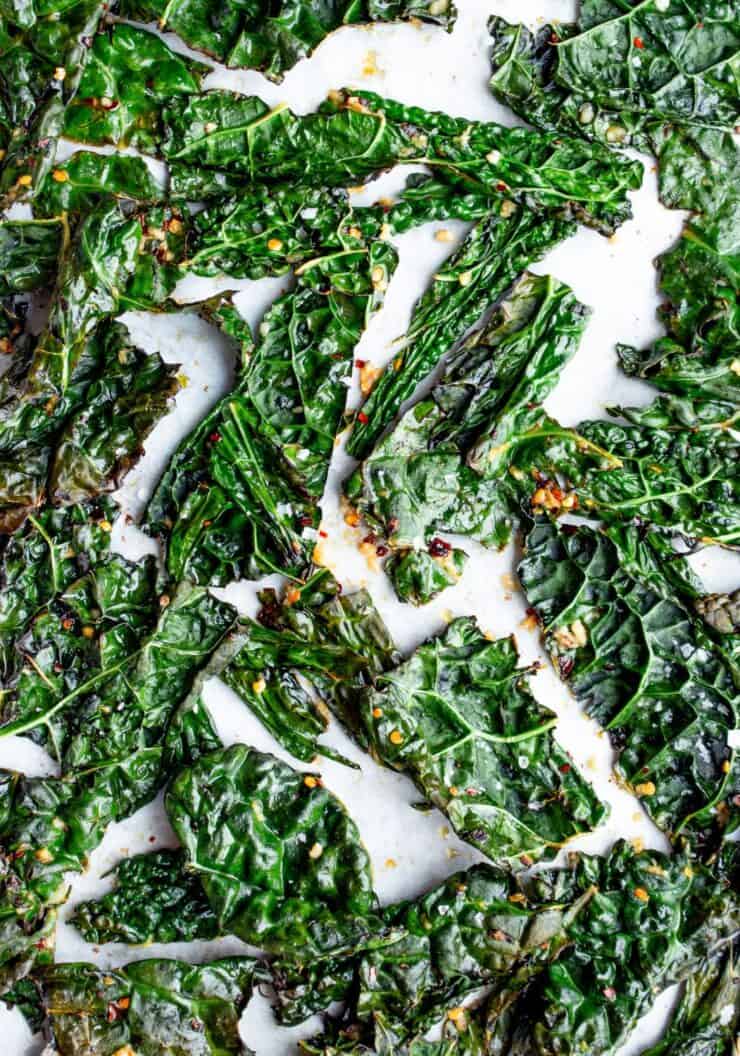
- Pat the kale leaves dry with a clean tea towel and add to the baking sheet. Coat in one tablespoon of rapeseed oil and season generously with salt. Place in the oven for 5–8 minutes, or until crispy.
- Meanwhile, set a large frying pan or wok over a medium heat and add one tablespoon of rapeseed oil. Add the fresh chilli, ginger and 200 grams of the shallots to fry for two minutes before adding the garlic and cooked rice.
- At the same time, set a separate pan over a medium heat, add one tablespoon of rapeseed oil and the remaining 100 grams of shallots to fry until crispy.
- To serve, add a portion of crispy kale and fragrant rice to a bowl. Slice two soy marinated eggs in halves or quarters and add, then drizzle over some of the marinating liquid and some additional soy sauce. Garnish with the crispy shallots and serve with an extra drizzle of chilli oil if you have a bottle in your cupboard.
Notes
- Add water to the marinade for longer marination to prevent overly salty eggs.
- Reuse the marinade for another batch of eggs or as a sauce, ensuring it's used within 1-2 days to avoid bacterial growth.
- Incorporate leftover marinade into other recipes such as stir-fries or sauces for fish.
Nutrition

Leave a comment and a rating!

- Weekly meal plans with a £20 budget
- 150+ exclusive recipes
- Personal dashboard
- Exclusive step by step videos
- Shopping list tools
- Advert Free experience



Comments